
When I walk into a sales enablement session, virtual or face-to-face, the two most useful tools are pen and paper.
Pen and paper are de-escalation tools. In sales enablement, they build long term trust and accountability with the sales team.
Why Nodding Through Feedback Erodes Trust
What happens most often: the presenter simply nods, or says “okay”, “let me check on that”, “I’ll confirm with who and who”. But there’s no pen, no paper, nothing to document it.
At some point, the audiences will know he/she will not remember at all. This slowly silences sales enablement. People stop asking questions.
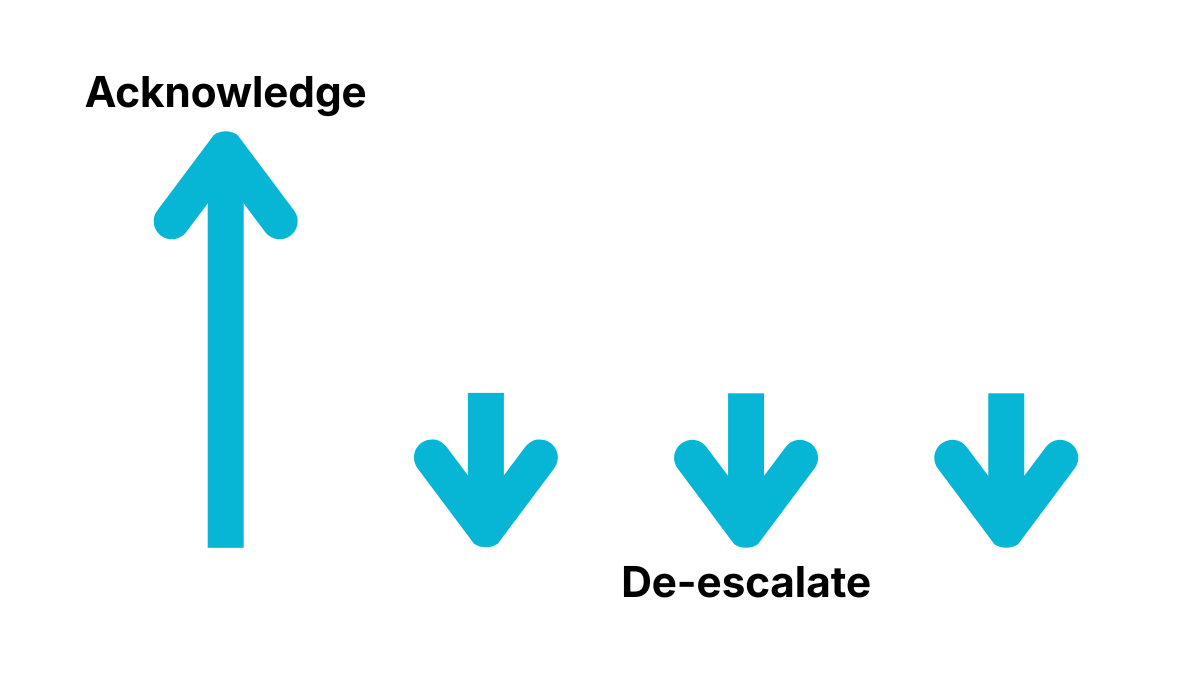
Acknowledge, Then De-escalate
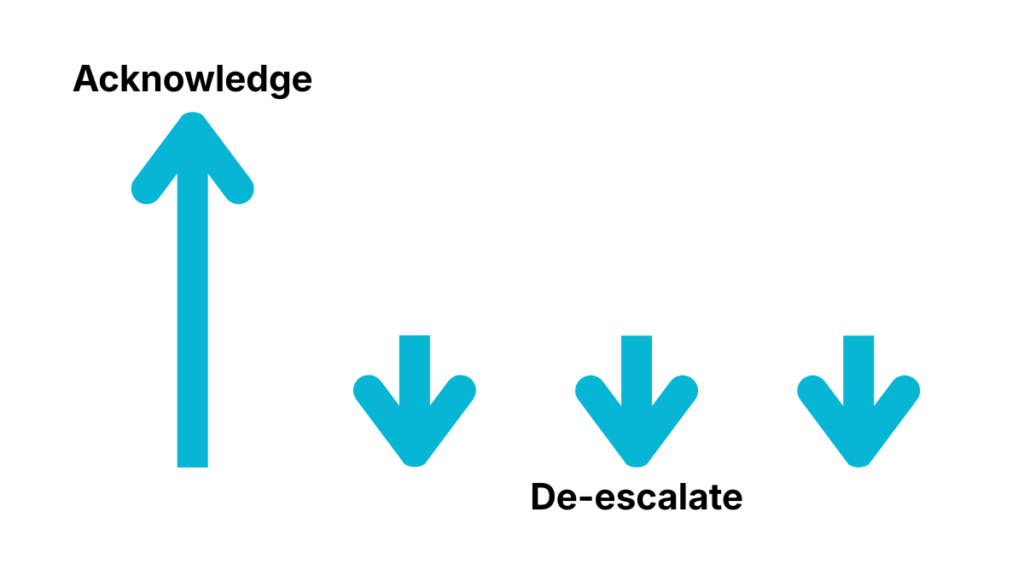
Part 1. Acknowledge
1. Acknowledge in the same direction as the feedback.
It does not mean that we were going to agree. It simply means we make an effort to understand what that perspective is. That’s very important.
2. Raise clarifying questions if necessary
Don’t be afraid to ask. The questions are there to understand the context behind what’s been brought up. Double-check with them.
For example, in a product launch sales enablement, you’re walking through the positioning and the value proposition. Somewhere in the benefit, the way you’ve messaged the feature doesn’t align with sales’ understanding of the target audience and its application. The benefit messaging doesn’t really go through.
- “Let me repeat your question — you can correct me if that’s not what you mean, or you could say it another way.”
- “Do you mean XYZ and ABC?”
- Tell them — our target market for this product launch is segment A and B. From what we know, the pain points and target audience are X and Y, and therefore that’s why we portray it this way. Then ask: “Where in that explanation do you see a different understanding from your experience and engagement with the market?”
3. Take time to acknowledge.
It doesn’t mean you’ll have to agree. But when you acknowledge, it makes it easier to de-escalate.
Part 2. De-escalate
1. Pull out the pen and paper.
2. Tell them “let me write this down and get back to you”.
3. Pause and actually write it down.
Earn Long-Term Trust
The most important thing: at the end of the presentation, send the list of questions. In a week, actually get back to them or tell them we need more time. Don’t BS the audience. That’s how we build trust in the long term.