
Most Application Messaging Is Blend
“This product is suitable for retail and hospitality.” “Ideal for residential and SMB.”
When we write application messaging, we very often write in a very vague form — and find it hard to craft a real story for that application.
What we don’t realize is that under these two markets there are a lot of different vertical segments and sub-segments.
For residential, you have:
- Small home buildings
- Apartment complexes
- Mansions
Imagine we’re installing air conditioner, the product and labor to apply in these 3 sub-segments are very different.
Sub-segments Provide Depth to Massaging
Knowing the segments and sub-segments gives us more depth to the massaging.
If you only know that your product fits “SMB,” you can only write at that level. You get generic headlines, generic use cases, generic sales enablement.
But once you know that a video doorbell fits a clinic — you can write something along the lines of visitor management. For a mansion or a storage warehouse, you can write about access tracking. These aren’t the same story. They shouldn’t be written as one.
The 3 Steps to Start
Step 1: Map the segments and sub-segments
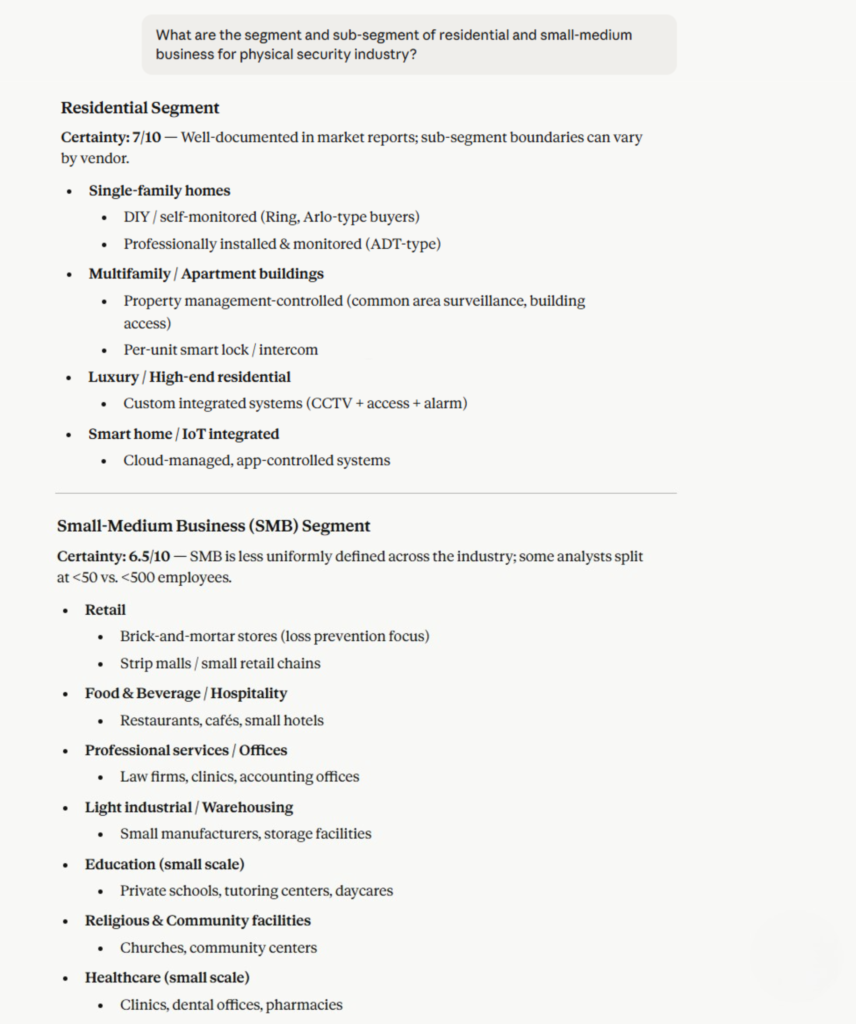
Ask any LLM:
“What are the segments and sub-segments of vertical A, vertical B for XYZ industry?”
Don’t filter yet. Get the full picture first.
Step 2: Filter by your channel model
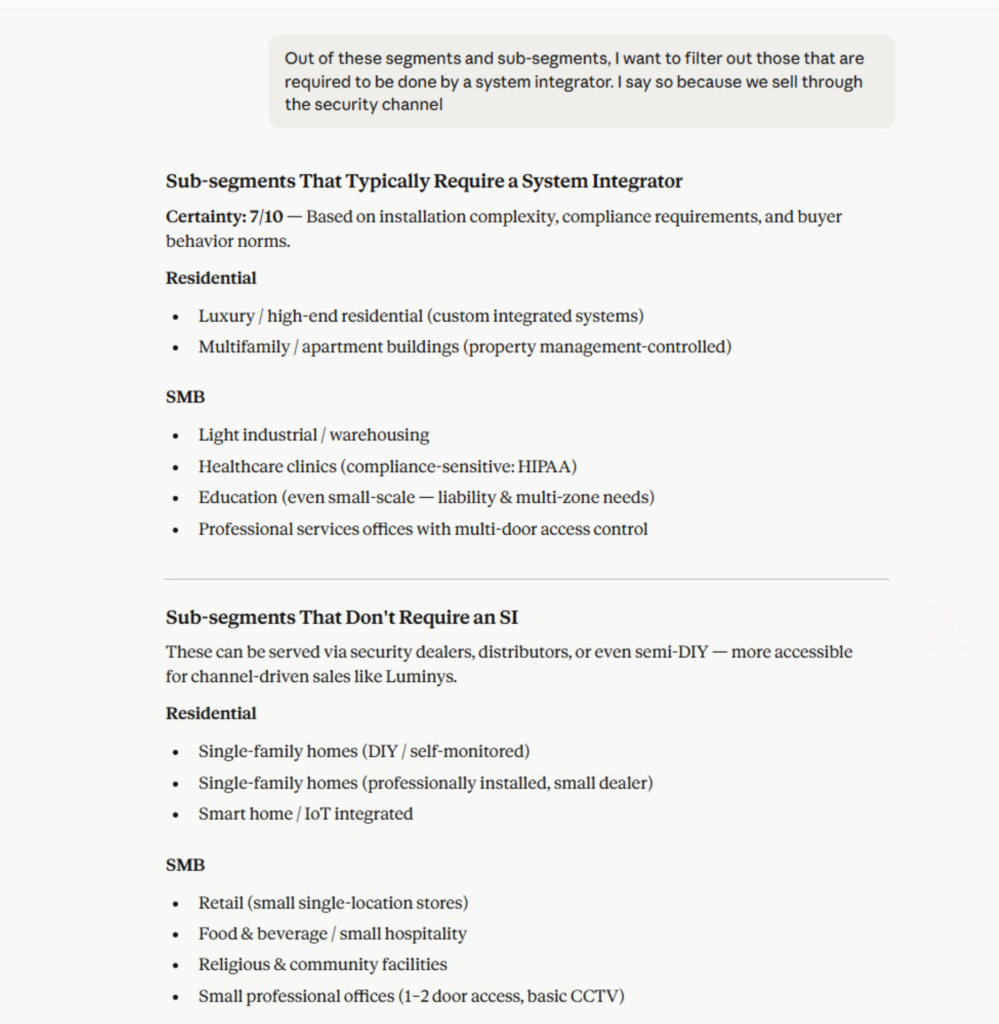
If you sell through a channel and require a system integrator for installation, ask the LLM to filter those segments.
For a video doorbell, this filter leaves you with apartment complexes and mansions on the residential side — not small home buildings where the homeowner does it themselves.
For small-medium business, it may leave you with clinics and other small businesses with slightly higher margin, so they could spare that for an integrator to come in and do the installation.
Step 3: Match product to pain point per segment
For those filtered segments, ask:
“What is the pain point or problem that could be addressed by your product?”
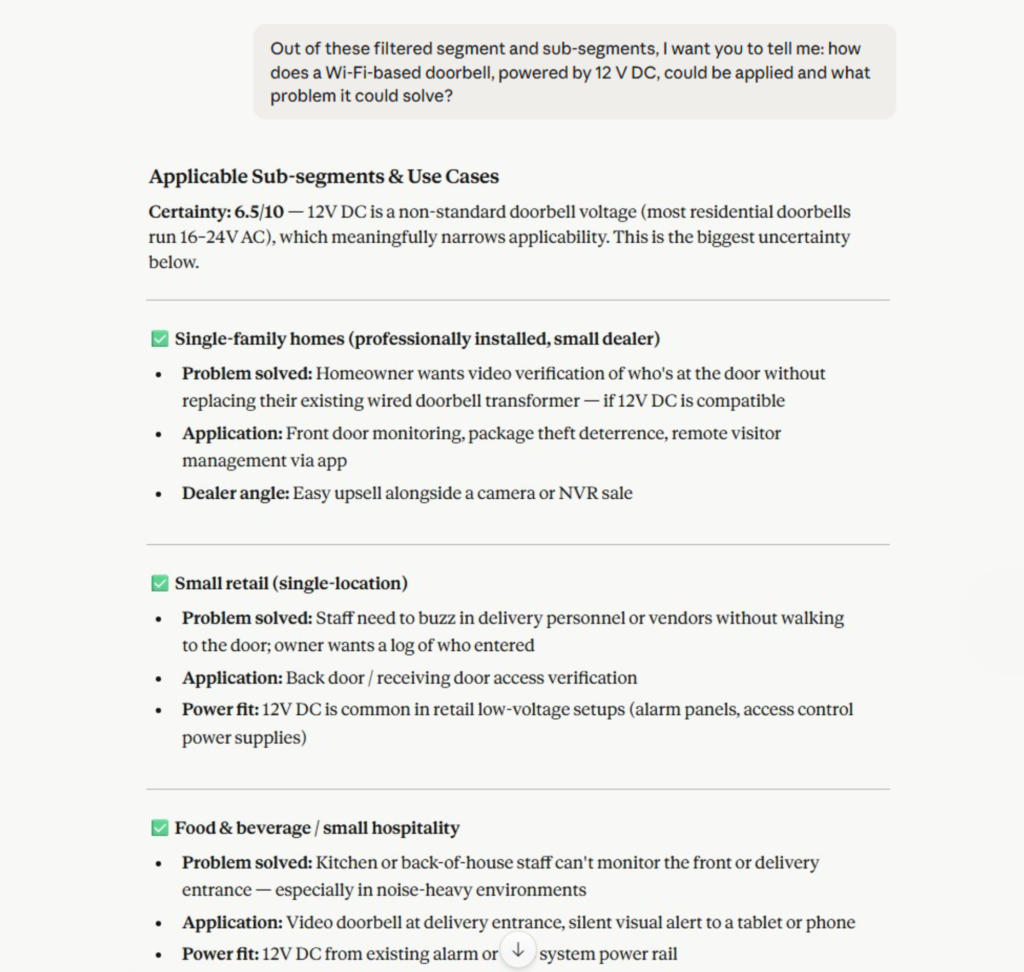
This is where the stories come out:
- Mansions: Visitor management, contractor and vendor access tracking
- Clinics: Managing patient arrivals without interrupting procedures
- Apartment complexes: Remote visibility across multiple entry points for property managers
By doing this, we have a better story rather than just a vague “this is good for residential.”